
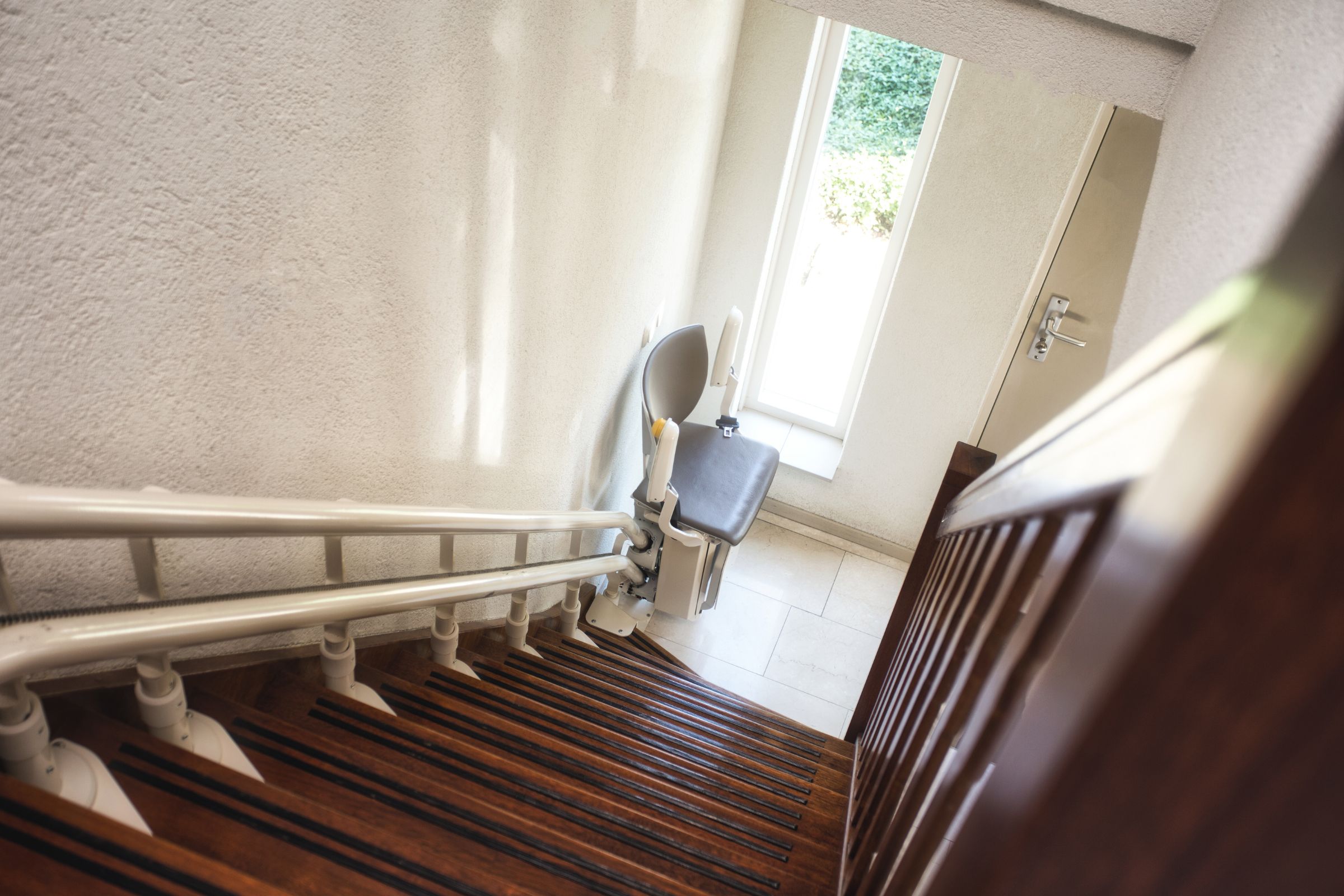
When planning a home accessibility upgrade, such as adding a stairlift, vertical lift, or residential elevator, it’s essential to understand how your home’s design shapes its staircase layout. In New Jersey, urban, suburban, and shoreline homes each present unique architectural features that affect how accessibility solutions are installed.
Let’s explore the differences in staircase styles by location and how to adapt each for improved mobility.
Urban Homes: Tight Spaces and Vertical Designs
Urban properties in areas like Hoboken, Jersey City, and downtown Newark often feature narrow, multi-story homes where space is our limiting factor. Straight stairlifts in NJ are ideal in these urban areas due to confined linear staircases.
Typical Staircase Layout:
- Steep and narrow stairs
- Often straight runs with minimal landing space
- Enclosed stairwells
Accessibility Considerations:
- Space-saving models with folding seats and rails are recommended.
- If vertical clearance is overly-limited, a temporary ramp over stairs during construction could ease mobility.
Suburban Homes: Spacious, Multi-Landing Staircases
Suburban homes in Central and South Jersey towns like Cherry Hill, Hillsborough, and Toms River often have more generous layouts with wide staircases and multiple landings.
Typical Staircase Layout:
- L or U shaped stairs with intermediate landings
- Wider steps and railings
- Multiple staircases (entryway, basement, plus a second floor)
Accessibility Considerations:
- Curved stairlifts in NJ are commonly required in homes with turns and landings like these.
- There’s usually more flexibility for residential elevator installation, especially if remodeling or additions are planned.
- Multiple access points in these homes offer more options for mobility upgrades like wheelchair lifts or platform lifts.
Shoreline Homes: Compact, Elevated Designs
Homes near the Jersey Shore including Ocean City, Cape May, and Long Beach Island often have elevated entrances and compact interiors, designed to withstand flood conditions, especially post-Sandy.
Typical Staircase Layout:
- Exterior staircases leading to main living space
- Interior stairs to access upper/rooftop levels
- Steep, sometimes spiral stairs to save interior space
Accessibility Considerations:
- Outdoor curved stairlifts or vertical platform lifts are critical for main entry access.
- Inside, home wheelchair lifts may be better suited than stairlifts due to limited space.
- A Savaria Eclipse elevator is a popular option in these homes. They may be feasible in larger builds or newer constructions with sufficient clearance.
Adapting Staircases for Accessibility
Regardless of location, key factors should be assessed:
- Staircase width and angle
- Number and shape of landings
- Headroom and structural support
- Intended mobility device (walker, wheelchair, etc.)
Working with a licensed accessibility contractor in NJ, like Mobility 123, ensures that your home’s unique design is properly evaluated for safe and lasting accessibility upgrades whether urban, suburban, or shoreline.
Conclusion: Custom Solutions for Every NJ Home
At Mobility123, we understand the distinct differences between home layouts across New Jersey. Whether you live in a compact row home in Jersey City or a raised ranch at the Shore, we offer tailored solutions from curved stairlifts, temporary ramps over stairs, and home elevators in NJ.
Ready to make your home more accessible, no matter the location? Contact us for a free in-home consultation and let’s design a mobility solution that fits your staircase and your lifestyle.
