
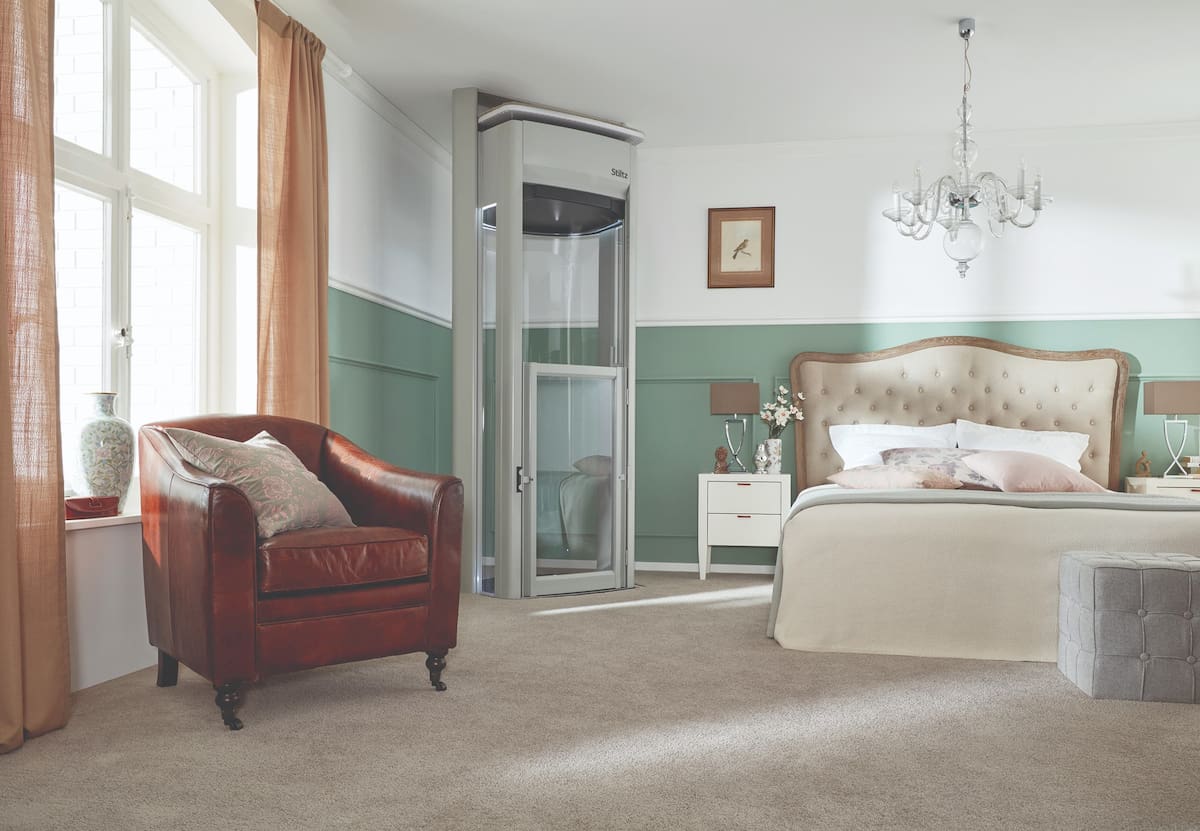
If you are researching a home elevator installation in New Jersey, you have probably come across three terms: hydraulic elevators, traction elevators, and shaftless (thru-floor) home lifts. Each system moves you between floors, but they differ significantly in how much space they need, what they cost, and how they are installed. This guide breaks down all three options side by side so you can see which type fits your home, your budget, and your long-term accessibility goals.
At Mobility123, we have spent over 20 years installing every type of residential elevator across New Jersey. We are authorized dealers for Savaria, Cibes Symmetry, and Stiltz, and our team includes NJ-licensed elevator mechanics who handle everything from permits to final inspection. The information in this article comes directly from that hands-on experience.
Quick Answer: Hydraulic vs. Traction vs. Shaftless at a Glance
For most existing New Jersey homes, a shaftless home elevator like the Stiltz Duo or Trio is the most popular choice among our customers. These thru-floor lifts require no shaft construction, no pit excavation, and no machine room. Full-shaft hydraulic and traction (MRL) elevators are better suited for new construction or major renovations where a dedicated hoistway can be built into the plans. The table below compares all three systems across the factors that matter most.
| Feature | Hydraulic | Traction (MRL) | Shaftless (Stiltz) |
| Drive System | Piston powered by hydraulic fluid pump | Motor-driven pulley with counterweight, no machine room | Steel-roped drum-braked motor |
| Shaft Required? | Yes – dedicated hoistway | Yes – dedicated hoistway | No – self-supporting structure |
| Machine Room | Yes – houses pump unit | No – motor mounts in hoistway where complaint | No |
| Typical Pit Depth | 6-8 inches | 6-8 inches (pitless options available) | None |
| Capacity | Up to 1,000 lbs | Up to 1,000 lbs | Duo Alta: 375 lbs / Trio Alta: 500 lbs |
| Speed | Up to 40 ft/min | Up to 40 ft/min | Up to 20 ft/min |
| Max Travel | Up to 50 ft (6 stops) | Up to 50 ft (6 stops) | Duo/Trio: 15 ft / Trio Plus: 19 ft (2 stops) |
| Electrical | Dedicated circuit, varies by model | 208/230V, single-phase | Dedicated 220V-240V, 20A with disconnect switch |
| Installed Cost (NJ) | $45,000 – $75,000+ | $45,000 – $75,000+ | Starting at ~$29,000 (turnkey ~$42,000) |
| Construction Impact | Major – shaft, pit, machine room | Major – shaft and pit (no machine room) | Minimal – cuts through floor only |
| Typical Project Timeline | 6-8 months | 6-8 months | 4-6 months |
| Best For | New construction, heavy loads, custom homes | New construction, energy efficiency priority | Existing homes, retrofits, faster install |
| Brands We Install | Savaria Infinity, Cibes Symmetry | Savaria Vuelift/ Eclipse, Cibes Symmetry (Inline Gear) | Stiltz Duo Alta, Stiltz Trio Alta, Savaria Telecab |
Pricing shown reflects typical installed costs in New Jersey as of 2026. Your actual cost depends on the number of stops, customization choices, and any structural work required. An in-home assessment is the best way to get an accurate quote.
How Hydraulic Home Elevators Work
A hydraulic home elevator uses a pump to push fluid into a cylinder, which drives a piston upward and lifts the cab. When descending, the fluid releases slowly through a control valve, lowering the cab at a smooth, controlled rate. This is one of the oldest and most proven elevator technologies, and it remains a strong option for new-construction homes in New Jersey where a dedicated shaft and machine room can be designed into the floor plan.
Mobility123 installs the Savaria Infinity hydraulic elevator, which offers up to 1,000 lbs of rated capacity, travels up to 50 feet across as many as six stops, and complies with ASME A17.1 safety standards. The Infinity is a fully customizable system with a range of cab finishes, door styles, and control options.
What to Expect from a Hydraulic Elevator Installation
Hydraulic systems require three things most existing NJ homes do not already have: a vertical hoistway (shaft), a shallow pit at the base (typically 6-8 inches), and a separate machine room to house the pump unit and hydraulic reservoir. For new construction or a major addition, these can be planned from the start. For an existing home, adding all three components means significant structural work, which is why hydraulic elevators are less common in retrofit projects.
The total project timeline for a hydraulic elevator in New Jersey is typically 6-8 months from initial order to final inspection. That includes manufacturing, construction of the shaft and machine room, installation, and the permitting and inspection process. For a detailed walkthrough of what is involved in adding an elevator to an existing home, our step-by-step retrofit guide covers the full process from site assessment through final inspection.
Hydraulic Elevator Specs and Costs
A fully installed hydraulic home elevator in New Jersey typically costs between $45,000 and $75,000 or more, depending on the number of stops, cab size, finishes, and the extent of construction required. Operating costs tend to be slightly higher than traction systems because the pump motor works against gravity on every upward trip.
How Traction (MRL) Home Elevators Work
A traction elevator uses a motor-driven pulley system connected to steel ropes or belts. A counterweight offsets the weight of the cab, so the motor uses significantly less energy per trip than a hydraulic system. In residential applications, the dominant traction technology today is Machine-Room-Less (MRL), meaning the motor mounts directly inside the hoistway rather than in a separate room. This eliminates one of the biggest drawbacks of traditional elevator installations.
Mobility123 installs MRL traction elevators from two manufacturers. The Savaria Vuelift and Savaria Vuelift Mini feature panoramic glass cab options and inverter-controlled motors for a smooth, quiet ride. The Cibes Symmetry Inline Gear system is a 2 HP, counterweighted MRL design that requires no machine room and offers up to 1,000 lbs of capacity. You can explore the full Cibes Symmetry lineup in our Cibes Symmetry design guide.
Geared vs. Machine-Room-Less (MRL) Traction Systems
Traditional geared traction elevators use a separate machine room and a large gear-driven motor. MRL systems achieve the same performance by mounting a compact, inverter-controlled motor at the top of the hoistway. For residential use in New Jersey, MRL is now the standard because it saves valuable square footage and simplifies construction. Geared traction is rarely specified for homes anymore.
Traction (MRL) Elevator Specs and Costs
MRL traction elevators, like the Savarai Eclipse, in New Jersey fall in the same price range as hydraulic systems: typically $45,000 to $75,000 or more installed. The pricing overlap exists because both systems require a full hoistway and similar construction scope. Where MRL traction stands out is in energy efficiency (the counterweight reduces motor workload by roughly half) and the elimination of the machine room. Project timelines are similar to hydraulic at 6-8 months. Overhead clearance requirements tend to be slightly higher than hydraulic systems, so ceiling height should be evaluated early in the planning process.
Which System Is Right for Your NJ Home?
The right elevator depends on your home’s layout, your timeline, and how much construction you are willing to take on. Here is how to think through the decision.
Space and Layout Considerations
New Jersey’s housing stock includes a lot of colonials, Cape Cods, split-levels, and ranch-style homes. Many of these were built without a closet stack or open chase that could easily become an elevator shaft. If your home does not have an obvious location for a hoistway, a shaftless system like Stiltz is typically the path of least resistance. It requires only a floor opening between levels and can be placed almost anywhere, including inside a closet, in a corner of a room, or along an exterior wall.
If you are building a new home or planning a major addition, a full-shaft hydraulic or MRL traction elevator can be designed into the floor plan from the start. This is the time to go with a larger system if you want higher weight capacity, faster speed, or service to three or more floors.
Energy Efficiency and Long-Term Operating Costs
MRL traction systems are the most energy-efficient option among full-shaft elevators because the counterweight does much of the heavy lifting. Hydraulic systems use more energy per trip because the pump motor must overcome the full weight of the cab and passengers on every ascent. For a residential elevator making 8-12 trips per day, the energy cost difference between systems is modest, but it does compound over the life of the equipment.
All Stiltz models require a dedicated 220V-240V, 20A electrical circuit with a disconnect switch, plus an active landline phone line for the emergency communication system. This is not a plug-in-into-the-wall situation, so electrical work should be factored into your project planning.
NJ Permits, Inspections, and Code Compliance
All home elevators installed in New Jersey require permits, must comply with ASME A17.1 safety standards, and are subject to inspection by the NJ Department of Community Affairs (DCA). Permit timelines vary widely by municipality, so this is something to factor into your project schedule early. At Mobility123, we handle the entire permit and inspection process as part of our turnkey installation service, from application through final sign-off.
One important note for NJ homeowners: pneumatic (vacuum) elevators are not ASME A17.1 compliant in New Jersey and are not a viable option. If you have been considering a vacuum elevator, a code-compliant alternative like the Savaria Vuelift offers a similar panoramic aesthetic within a fully compliant system.
Why Shaftless Home Elevators Are the Most Popular Choice for Existing NJ Homes
Here is the reality of most elevator inquiries we receive: the homeowner has an existing two-story home, they need to move between floors safely, and they do not want a construction project that stretches over half a year. For these situations, a shaftless thru-floor elevator has become the most popular option among our customers. No shaft, no pit, no machine room, and a project timeline that is significantly shorter than a full-shaft installation.
Mobility123 is the #1 Stiltz dealer nationally by lead volume, and there is a good reason for that: Stiltz home lifts are the most practical solution for the majority of existing NJ homes. The Stiltz Duo Alta (375 lb capacity) comfortably fits two standing passengers, while the Stiltz Trio Alta (500 lb capacity) is large enough for a wheelchair or power chair. For homeowners who need additional capacity, the Stiltz Trio Alta Plus offers 550 lbs and a slightly larger platform. All models are installed using a self-supporting structure that requires only a cut between floors.
The Savaria Telecab is another shaftless option we install, offering a different aesthetic and slightly different footprint for homes where the Stiltz configuration may not be ideal.
One thing to be aware of: Stiltz elevators are not a simple plug-and-play installation. They require a dedicated 220V-240V, 20A electrical circuit with a disconnect switch, plus an active landline phone line for the built-in emergency communication system. Mobility123 coordinates all electrical work as part of our turnkey service.
Pricing for a Stiltz home elevator starts at approximately $29,000 for the unit and basic installation. With full turnkey service from Mobility123, including construction prep, electrical, permits, and inspection coordination, the total typically comes to around $42,000. The overall project timeline runs 4-6 months from order to completion. That is roughly half the cost and a shorter timeline compared to a full-shaft elevator, with a fraction of the construction disruption. You can learn more about the differences between these categories on our home elevators vs. homelifts vs. wheelchair lifts comparison page.
For a deeper look at Stiltz specifically, visit our homelifts product page or read about what makes Stiltz home elevators special.
Frequently Asked Questions
Full-shaft home elevators (both hydraulic and MRL traction) typically cost $45,000 to $75,000 or more fully installed in New Jersey. Shaftless home elevators like the Stiltz Duo or Trio start at approximately $29,000 for the unit and installation, with full turnkey service from Mobility123 bringing the total to around $42,000. The final price depends on the number of floors served, cab finishes, structural requirements, and permitting.
Hydraulic elevators require a separate machine room to house the pump and fluid reservoir. MRL (Machine-Room-Less) traction elevators mount the motor inside the hoistway, eliminating the machine room entirely. Shaftless systems like Stiltz need neither a machine room nor a hoistway. For existing NJ homes, this is often the deciding factor because dedicating additional square footage to mechanical equipment is not always feasible.
Yes. All residential elevator installations in New Jersey require building permits and must pass inspection by the NJ Department of Community Affairs. This applies to every type of elevator system, including shaftless home lifts. Mobility123 manages the entire permitting and inspection process for every installation we perform.
From order to completion, shaftless elevators like Stiltz typically take 4-6 months, while full-shaft MRL traction and hydraulic systems run 6-8 months. These timelines include manufacturing, construction, installation, and the permitting and inspection process. Permit processing time varies by municipality and can add additional time to any project, so early planning is important.
Shaftless systems like the Stiltz Duo and Trio are among the quietest residential elevators because they use a steel-roped drum motor with no hydraulic pump or large gear mechanism. MRL traction elevators are also very quiet due to their inverter-controlled motors and counterweight system. Hydraulic elevators produce the most noise, primarily from the pump motor during ascent, though modern systems are still significantly quieter than commercial hydraulic equipment.
Next Steps: Find the Right Elevator for Your Home
For the majority of existing New Jersey homes, a shaftless Stiltz home elevator offers the most practical combination of cost, timeline, and minimal disruption. If you are building new or planning a large renovation, a full-shaft hydraulic or MRL traction elevator gives you greater capacity and design flexibility. Either way, the right starting point is an in-home assessment where we can evaluate your layout, discuss your goals, and identify the best system for your specific situation.
Schedule a free home assessment by calling our Absecon office at (609) 385-9575, our Hillsborough showroom at (908) 498-7155, or request a consultation online. You are also welcome to visit either showroom to see and try our products in person.
If you are still exploring whether an elevator, stairlift, or platform lift is the right fit, our complete comparison guide walks through all four options side by side. For wheelchair-specific access needs, our vertical platform lifts page covers VPL options that may be a better match.
