
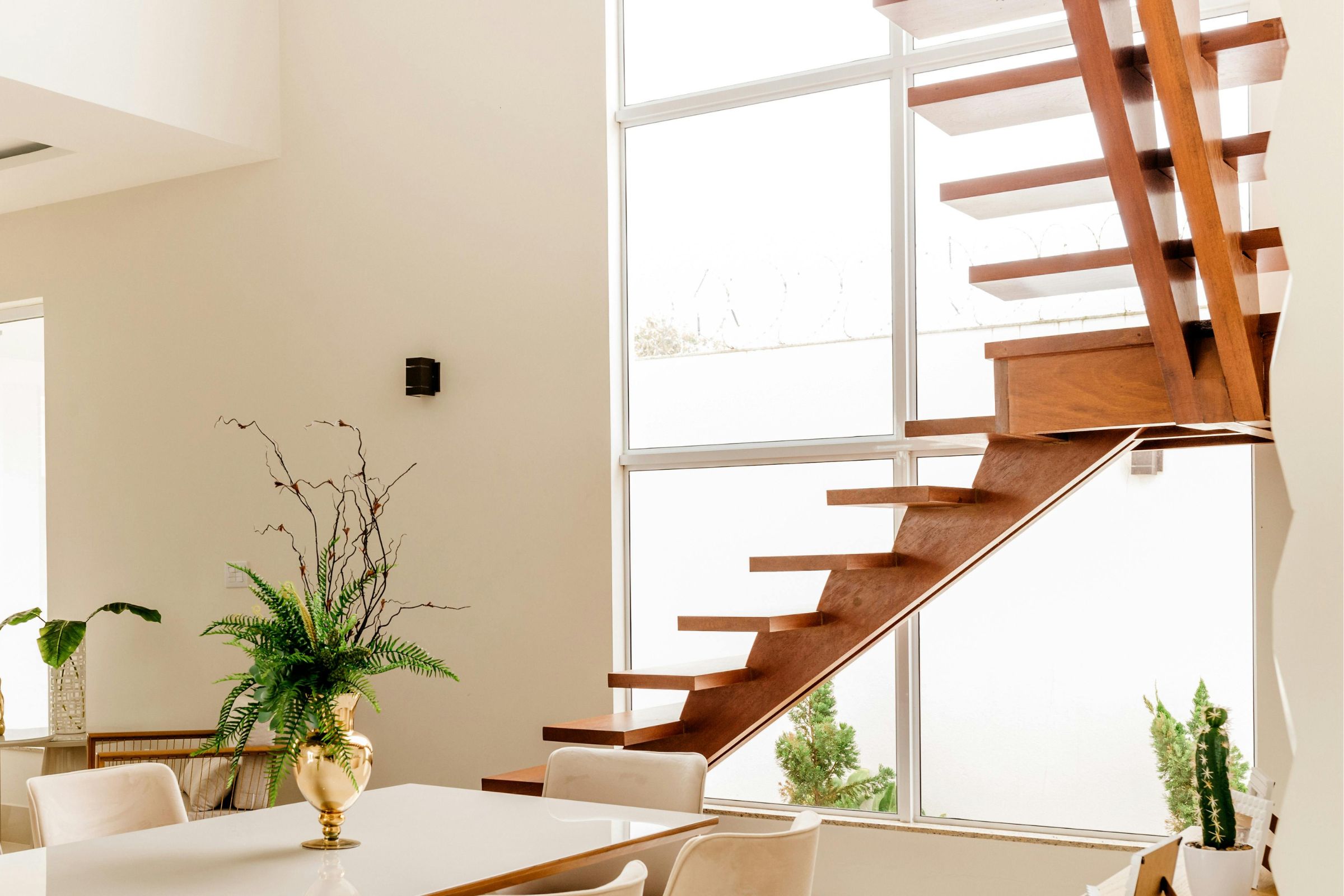
Modern homes in New Jersey often feature stylish staircases that add architectural appeal, like spiral, floating, or split-level staircases. But when it comes to home accessibility, these stunning designs can quickly turn into daily mobility challenges. Whether you’re planning to accommodate a wheelchair user, or simply future-proof your home, modifying these staircases for safety and ease of use is essential.
In this guide, we’ll cover how accessible these stair types really are, what modifications are possible, and whether alternatives like curved stairlifts, home elevator lifts, or even a temporary ramp over stairs may be better options for your NJ property.
Understanding These Unique Stair Types
Spiral Staircases
Spiral stairs are compact and often used to save space or add visual interest. But their narrow treads and tight curves make them difficult, and often dangerous, for those with limited mobility.
Accessibility challenges:
- Tight turns not suitable for walkers or stairlifts
- Small step surfaces increase fall risk
- No room for handrails on both sides
Floating Staircases
Floating stairs are a hallmark of modern architecture. They have open risers and appear to “float” with minimal visible support. While visually striking, they’re not ideal for those needing stability or mobility aids.
Accessibility challenges:
- Lack of risers creates visual and physical gaps
- Limited railing support
- Not compatible with most stairlift rail systems
Split-Level Staircases
Common in mid-century or suburban NJ homes, these have short sets of stairs leading to half levels. While easier to navigate than full flights, their fragmented layout can still pose risks, especially if mobility declines.
Accessibility challenges:
- Multiple transitions between levels
- Frequent stops may require multiple lifts or custom solutions
- May require combining curved stairlifts with straight stairlifts
Can You Modify These Staircases for Accessibility?
Spiral Staircases
Modifying a spiral staircase for accessibility is difficult and rarely recommended. Most stairlifts don’t accommodate the radius and pitch of spiral stairs. For this reason, many homeowners opt to bypass them altogether by installing something like a Savaria Eclipse elevator.
Floating Staircases
These unfortunately are typically replaced or enclosed before any accessibility equipment can be installed. Even when modified, the cost and effort may outweigh the benefits. Safer alternatives include installing residential elevators or re-routing mobility through another part of the home.
Split-Level Staircases
These offer the most modification potential. Depending on layout, we’ve seen success with one or more curved stairlifts in NJ. These provide seamless access across multiple levels. Alternatively, vertical wheelchair lifts in NJ can serve short flights efficiently.
Best Alternatives for Accessibility
- Home elevator lifts: Ideal for bypassing difficult stairs completely, especially in modern or multi-level homes.
- Temporary ramp over stairs: Useful during renovations or for short-term accessibility needs.
- Curved stairlifts: Custom-made to fit complex layouts and landings, especially useful for homes with winding or split-level stairs.
- Vertical platform lifts: A smart option for wheelchair users when elevators aren’t feasible.
Explore our full offering of home elevator installation in NJ or stairlifts to learn more.
Final Thoughts: When to Adapt and When to Avoid
While it’s possible to make certain modifications to spiral, floating, or split staircases, the decision often comes down to safety, feasibility, and cost. In many cases, it’s smarter to install alternative accessibility solutions rather than trying to retrofit a design that fundamentally conflicts with mobility needs.
If you’re unsure how to adapt your home, Contact Mobility123! Our experienced team will assess your layout and recommend solutions that support comfort, safety, and independent living without compromising style.
