
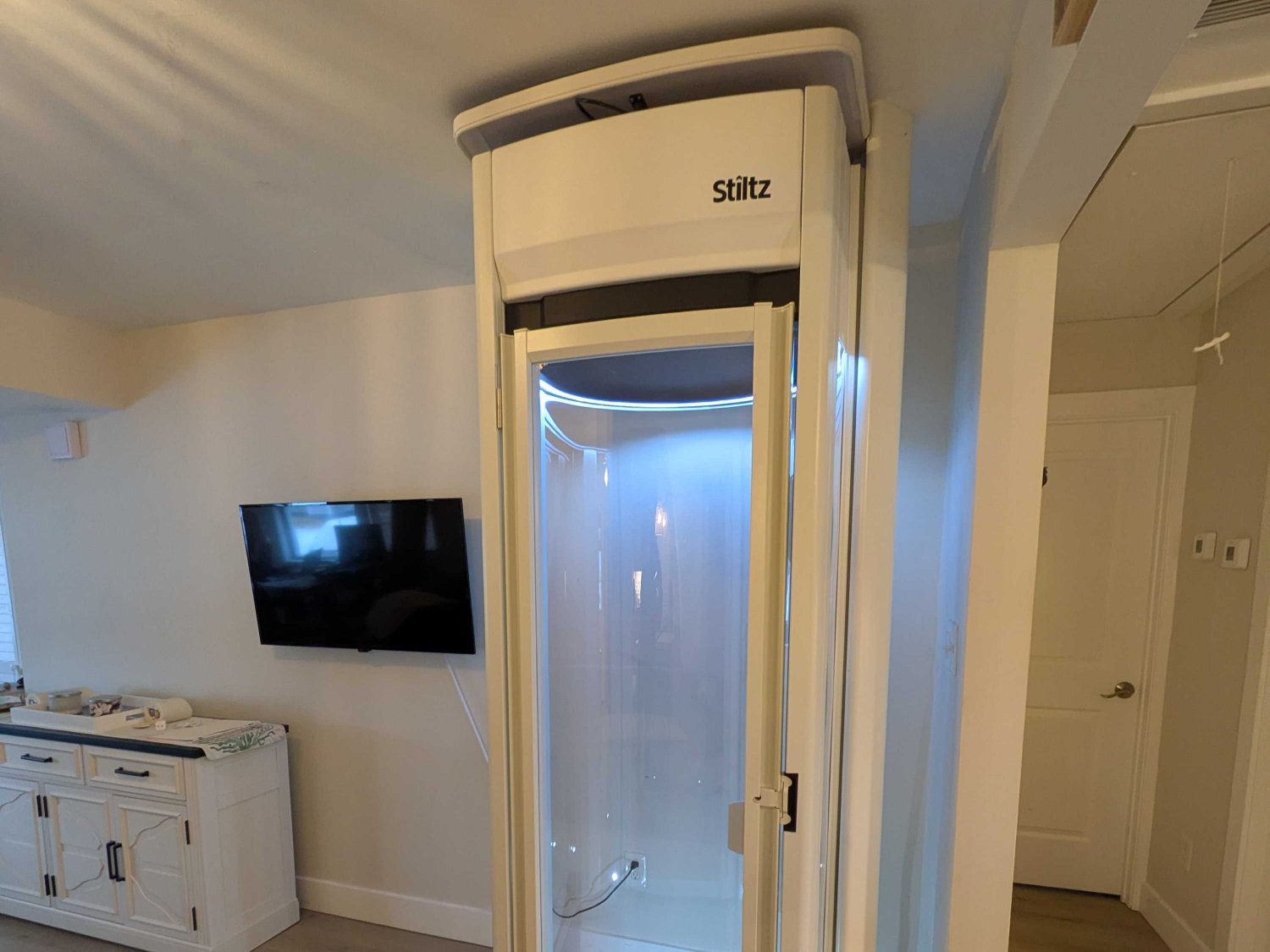
If you or someone in your family is finding the stairs harder to manage, you are not alone. According to the CDC, one in four Americans aged 65 and older experiences a fall each year, and stairs are one of the most common locations where these falls occur. A through-floor home lift – sometimes called a shaftless elevator or homelift – offers a practical, space-efficient way to move safely between floors without the cost and construction of a traditional home elevator.
This guide walks you through everything you need to know before choosing a residential home lift: the key decisions, real installation considerations, model-by-model breakdowns of six popular through-floor lifts, verified specifications, and what turnkey installation actually involves – including the construction, electrical, and permitting work that most dealers leave out of the conversation.
What Is a Through-Floor HomeLift?
A through-floor home lift is a compact residential elevator that travels between two floors through a simple opening cut in the floor and ceiling. Unlike traditional home elevators that require a dedicated shaft, machine room, and significant structural work, through-floor lifts are self-supporting or semi-supporting units that fit into existing homes with far less construction. Most models are powered by standard household electrical circuits and can be installed in one to three days once the structural preparation is complete.
These lifts are designed specifically for private homes. They typically serve two stops (ground floor to first floor), carry between 375 and 770 pounds depending on the model, and occupy a footprint roughly the size of a small closet. For many New Jersey homeowners living in two-story colonials, split-levels, or Cape Cods, a through-floor lift provides a realistic way to age in place without relocating or undertaking a major renovation.
Is a HomeLift Right for Your Home in New Jersey?
New Jersey's housing stock is well-suited to through-floor lifts. The two-story colonial, the raised ranch, and the split-level are among the most common home styles across the state, and all of them present stair-access challenges for residents with mobility limitations. A through-floor lift can typically be placed in a corner of a living room, inside a closet, in a hallway, or even in a garage – wherever there is a clear path between floors.
Before committing to a specific model, consider these practical questions: Do you need the lift for a standing passenger only, or does it need to accommodate a wheelchair? How much floor space can you give up on each level? What is your ceiling height? Is your home's electrical panel capable of supporting the unit, or will it need an upgrade? And critically, does the area between floors have any obstructions such as HVAC ducts, plumbing, or structural beams that could complicate the floor cut?
In our experience installing 1000+ Homelifts across New Jersey, the answers to these questions narrow the field quickly. A qualified in-home assessment is the single most important step before purchasing any residential home lift.
Key Decisions Before Choosing a Residential HomeLift
Standing Passenger or Wheelchair Accessible?
This is the most consequential decision. Lifts designed for standing passengers (or a seated user on a fold-down seat) have a significantly smaller footprint than wheelchair-accessible models. If wheelchair access is not needed now and is unlikely to be needed in the foreseeable future, a compact standing-passenger model will save space and cost. If wheelchair access is a possibility, choose a model with a platform large enough to accommodate a standard wheelchair – generally 34 inches wide by 48 inches deep or larger.
Number of Stops
Most through-floor lifts serve exactly two stops (Stiltz Trio Alta+ can do 3-stops). If your home requires access to three or more floors, you will likely need a traditional home elevator with a shaft, such as a Savaria Eclipse or Savaria Vuelift, which can travel up to six stops.
Available Space
Through-floor lifts vary in footprint from under 9 square feet to around 15 square feet. The footprint on each floor needs to be clear – not just for the lift car itself, but for the enclosure, door swing, and any required clearances. Ceiling height matters too; most models require a minimum overhead clearance of 89 to 96 inches.
Power Requirements
Some models run on a standard 110V household outlet, while most require a dedicated 240V circuit. If your home's electrical panel is at capacity – common in older NJ homes – a panel upgrade may be part of the project.
Turnkey Installation Explained: What Most Dealers Leave Out
When most home lift dealers quote a price, they are quoting the equipment and basic installation. What they often leave out is the construction and coordination work that actually makes the lift functional in your home. At Mobility123, we handle the entire project as a turnkey installation, which means one contractor, one point of contact, and one scope of work that includes:
• Structural assessment and engineering review
• Floor opening cut with proper framing and reinforcement
• Ceiling and floor finish work (matching existing trim, flooring, and paint)
• Electrical work – dedicated circuit, panel upgrade if needed
• NJ building permits and coordination with inspectors
• Lift installation, testing, and user training
• Final NJ Department of Community Affairs inspection
This turnkey approach matters because the construction phase – not the lift itself – is where most complications arise. A floor cut through a load-bearing area requires header beams. HVAC ducts may need rerouting. Finish carpentry needs to blend seamlessly with the existing home. When the dealer handles only the lift and leaves the rest to you, the project becomes a coordination headache involving multiple contractors, conflicting schedules, and potential code issues.
Structural and Electrical Considerations in NJ Homes
New Jersey homes present specific considerations for through-floor lift installation. Many NJ homes built before 1970 have older electrical panels (60 or 100 amp) that may need upgrading to support a lift's power draw. Homes with balloon-frame construction require different structural reinforcement than platform-framed homes. Split-level homes – extremely common in North and Central Jersey – sometimes offer creative placement options but also present challenges with variable floor heights.
NJ requires a construction permit for home lift installations, and the completed installation must pass a final inspection test. The lift must comply with ASME A17.1 safety codes and standards. Mobility123 handles the entire NJ permit process as part of every turnkey installation, including permit applications, inspector scheduling, and compliance documentation.
Model-by-Model Breakdown
Below is a detailed look at six through-floor home lifts available in the residential market. Specifications listed here have been verified against manufacturer documentation and independent dealer sources. Where a specification could not be confirmed from two independent sources, it has been omitted.
Stiltz Duo Alta

The Stiltz Duo Alta is one of the most popular through-floor lifts in the residential market, and for good reason. With a footprint of approximately 8.5 square feet, it fits into spaces where no other elevator could go – inside a closet, a corner of a room, or a hallway. The Duo Alta uses a self-supporting dual-rail design, meaning it bears its own weight and places no structural load on the home's walls or frame. It runs on a standard household electrical outlet and travels at approximately 30 feet per minute.
The Duo Alta carries up to 375 lbs and accommodates one to two standing passengers. It is not wheelchair accessible. Interior dimensions of approximately 31 inches wide by 28 inches deep provide comfortable standing room. Maximum travel is approximately 13 feet, covering a standard two-story floor-to-floor distance. The quiet electric motor and counterweighted system provide a smooth ride.
Turnkey installed cost (construction included): $29K-45K
Cost varies based on floor-to-floor distance, structural complexity of the floor cut, electrical requirements, finish selections, and local permitting fees.
Stiltz Trio Alta

The Stiltz Trio Alta shares the same self-supporting dual-rail design as the Duo Alta but with a significantly larger platform. At approximately 15 square feet, it accommodates up to three standing passengers or one person in a standard wheelchair. This makes the Trio Alta one of the most compact wheelchair-accessible through-floor lifts on the market.
Weight capacity is 550 lbs (250 kg). Maximum travel is approximately 13 feet with a maximum of two stops. The Trio Alta requires a 240V single-phase power supply rather than a standard 110V outlet, which may mean adding a dedicated circuit. Like the Duo, it is a freestanding structure that does not require a shaft or load-bearing wall attachment.
Turnkey installed cost (construction included): $33K-55K
The Trio Alta costs more than the Duo Alta due to the larger floor opening, additional structural reinforcement, 240V electrical requirements, and the larger unit itself.
Cibes Ascenda

The Cibes Ascenda is a European-designed through-floor lift that emphasizes both aesthetics and functionality. It is available in four sizes – S, M, L, and XL – giving homeowners flexibility to match the lift to their space and accessibility needs. The XL model is large enough to accommodate a wheelchair user.
The Ascenda carries up to 770 lbs, which is the highest weight capacity among the models reviewed here. It uses Cibes' EcoSilent motor technology rated at 2.7 kW for quiet operation. Minimum overhead clearance is 89 inches, and the lift requires no pit – it sits directly on the finished floor. Speed is approximately 30 feet per minute. Cibes reports that 95% of the lift is made from recyclable materials, which may appeal to environmentally conscious homeowners.
Turnkey installed cost (construction included): $55K-75K
Cost varies by size selected (S through XL), finish options, floor-to-floor distance, and the structural work required to prepare the opening.
Savaria Luma

The Savaria Luma is a shaftless through-floor lift from Savaria, one of the largest accessibility equipment manufacturers in North America. It features a compact footprint of 38 inches by 47 inches and a cabin interior of approximately 29 inches wide by 28 inches deep by 79 inches tall. The Luma supports up to 400 lbs and serves a maximum of two stops with a maximum travel of approximately 165 inches (nearly 14 feet).
The Luma uses a winding drum drive system and operates on standard 110-240 VAC single-phase power. It travels through a floor cut-out with no shaftway required. The design is clean and modern, with panel and finish options to match residential interiors. The Luma's cabin dimensions limit it to standing passengers only – it is not wheelchair accessible.
Turnkey installed cost (construction included): $35K-55K
Cost is influenced by travel distance, finish level, electrical configuration, and the structural work required for the floor opening.
Bruno Connect

The Bruno Connect is a through-floor elevator from Bruno, an American manufacturer known for stairlifts and vertical platform lifts. The Connect is available in three sizes: Compact (cabin approximately 21 inches by 30 inches, single rider), Classic (approximately 34 inches by 30 inches, two riders), and XL (the largest option for two riders with more interior room).
All three sizes carry up to 507 lbs (230 kg). Maximum travel is 15 feet 9 inches – the longest travel distance among the models reviewed here, making the Bruno Connect a strong option for homes with taller floor-to-floor distances. The Connect uses a traction drive system and runs on a standard 110V household outlet. It includes standard safety features including a fire protection system, safety sensors, and soft start and stop.
Turnkey installed cost (construction included): $35K-55K
Cost varies by model size (Compact, Classic, or XL), travel distance, designer finish selections, and the scope of structural and electrical work.
Stannah Uplift

The Stannah Uplift is a through-floor home lift from Stannah, a UK-based manufacturer with a long history in the stairlift and accessibility market. The Uplift is available in two models: the S2 (compact, for one seated or two standing passengers) and the S3 (larger, accommodating up to three standing passengers or one wheelchair user).
Both models carry up to 551 lbs. The S2 has an external footprint of approximately 31 inches by 40 inches, with internal cabin dimensions of approximately 794mm by 940mm. The S3 offers a larger cabin for wheelchair access. Both models operate quietly, with noise levels reported below 50 decibels – comparable to a household refrigerator. The Uplift is a freestanding unit that does not require structural wall support.
Turnkey installed cost (construction included): $TBD
Cost depends on model selection (S2 or S3), floor-to-floor distance, finish options, and the extent of structural and electrical preparation required. Availability and dealer network coverage in the US market may also affect pricing and lead times.
Side-by-Side Comparison Table
| Feature | Stiltz Duo Alta |
Stiltz Trio Alta |
Cibes Ascenda | Savaria Luma | Bruno Connect | Stannah Uplift |
|---|---|---|---|---|---|---|
| Weight Capacity | 375 lbs | 550 lbs | ~770 lbs | 400 lbs | 507 lbs | ~551 lbs |
| Wheelchair Accessible | No | Yes | XL only | No | Classic/XL | S3 only |
| Max Stops | 2 | 2 | 2 | 2 | 2 | 2 |
| Self-Supporting | Yes | Yes | Yes | Yes | Yes | Yes |
| Shaft Required | No | No | No | No | No | No |
| Size Options | 1 size | 1 size | 4 (S-XL) | 1 size | 3 sizes | 2 (S2, S3) |
| Power | 240V | 240V | Varies | 110-240V | 110V | Varies |
Real Installed Cost Drivers (Construction Included)
The price of a through-floor home lift is not just the price of the lift. The total installed cost includes the equipment, the construction work to prepare your home, electrical work, permitting, and finishing. Here are the real factors that drive cost:
Equipment cost: The lift itself is the base price, which varies by model, size, and finish selections. Premium finishes, glass panels, and designer options increase cost.
Structural work: Cutting a floor opening requires framing, and if the cut passes through or near a load-bearing member, header beams and additional reinforcement are needed. This can add several thousand dollars.
Electrical work: A 110V lift may need only a dedicated outlet (opten needs a step-up transformer). A 240V lift requires a dedicated circuit from the panel. If the panel itself needs upgrading, that is an additional cost.
Finish carpentry: Matching the new opening to existing flooring, trim, baseboards, and paint is what makes a lift installation look like it belongs in the home rather than being an afterthought.
Permitting and inspections: NJ building permits and Department of Community Affairs inspections are mandatory. Permit fees vary by municipality.
Site-specific challenges: HVAC ducts that need rerouting, plumbing in the path of the floor cut, unusual ceiling heights, or limited access for moving the lift into position can all affect cost.
When comparing quotes, always ask whether the price includes all construction, electrical, permitting, and finish work – or just the lift and basic installation. A turnkey quote that covers everything may appear higher initially, but it eliminates the risk of surprise costs and coordination headaches. For a realistic assessment tailored to your home, schedule a free home assessment with our team.
Service, Code Compliance, and Long-Term Ownership
A through-floor home lift is a long-term investment, and choosing the right installer matters as much as choosing the right model. Here is what to consider for the years after installation:
Ongoing maintenance: Most manufacturers recommend annual maintenance checks. Regular service keeps the lift operating safely and can extend its lifespan significantly. Mobility123 provides ongoing service and maintenance for all lifts we install.
Code compliance: NJ requires that home lifts comply with ASME safety codes and pass a Department of Community Affairs inspection at installation. Choosing a licensed NJ Home Improvement Contractor (HIC) for installation helps ensure your lift meets all applicable codes.
Warranty: Warranty terms vary by manufacturer. Most offer a parts warranty of one to two years and a separate labor warranty. Understand what is covered and what is not before purchasing.
Resale value: A professionally installed home lift can add value and marketability to a home, especially in areas with an aging population. A lift that looks built-in – with proper finish work and code-compliant installation – has a very different impact than one that looks like an afterthought.
Common Misconceptions About Through-Floor Elevators
A homelift requires major renovation
Through-floor lifts are specifically designed to minimize construction. Most installations require a floor opening of roughly 10 to 15 square feet, some framing reinforcement, and a dedicated electrical outlet or circuit. The typical structural preparation takes one to two days, and the lift installation itself often takes one day.
Homelifts are only for seniors
While aging in place is a common reason for installing a home lift, these lifts also serve people recovering from surgery, living with chronic conditions, managing temporary injuries, or simply wanting to future-proof their home. Families with members who use wheelchairs or walkers also benefit.
Any contractor can install a homelift
Home lift installation involves structural modification, electrical work, and compliance with ASME safety codes and NJ building codes. In New Jersey, the installer must hold a Home Improvement Contractor (HIC) registration. Improper installation can void the manufacturer warranty, fail inspection, and create safety hazards.
Through-floor lifts are loud
Modern through-floor lifts operate at noise levels comparable to a household appliance. Several models in this review operate below 50 decibels. These are not commercial elevators – they are designed for the quietness expected in a home environment.
FAQ: Straight Answers to Home Lift Questions
How much does a through-floor home lift cost installed?
A through-floor home lift typically costs between $29,000 and $65,000 fully installed with all construction, electrical work, permitting, and finish carpentry included. The wide range reflects differences in model selection, floor-to-floor travel distance, structural complexity, and finish options. An in-home assessment is the most accurate way to get a realistic estimate for your specific home.
Do I need a permit to install a home lift in New Jersey?
Yes. New Jersey requires a building permit for home lift installation, and the completed installation must pass an inspection by the NJ Department of Community Affairs. The lift must comply with applicable ASME safety codes. A licensed NJ Home Improvement Contractor handles the permit application and coordinates the inspection as part of a turnkey installation.
How long does it take to install a through-floor home lift?
The structural preparation – cutting the floor opening, framing, and electrical work – typically takes three to five days. The lift installation itself typically takes one day. Total project timeline from order to operational lift ranges from 4-6 months depending on the model, as most lifts are manufactured to order.
Can a through-floor home lift accommodate a wheelchair?
Some models can and some cannot. The Stiltz Trio Alta, Cibes Ascenda XL, Bruno Connect Classic and XL, and Stannah Uplift S3 are all designed to accommodate a standard wheelchair. The Stiltz Duo Alta, Savaria Luma, and Stannah Uplift S2 are designed for standing passengers only. Wheelchair accessibility requires a larger platform and therefore a larger floor opening.
Will a homelift affect my home's resale value?
A professionally installed, code-compliant home lift can be a selling point, particularly in markets with aging populations. According to AARP, 77% of adults aged 50 and older want to remain in their homes long-term, driving demand for accessible housing. The key is quality installation with proper finish work that integrates the lift into the home's design.
Choosing the Right Homelift for Your Home
The best home lift for your home depends on your specific situation: your mobility needs, your home's structure, your budget, and your long-term plans. There is no single right answer, but the models reviewed here represent the strongest options in the through-floor lift market as of 2026.
The most productive next step is a professional in-home assessment, where an accessibility consultant evaluates your home's structure, measures the space, reviews electrical capacity, and recommends the models that fit. At Mobility123, we provide free, no-obligation home assessments throughout New Jersey and the tri-state area. Contact us to schedule yours, or visit our showroom to see and try home lifts in person.
