
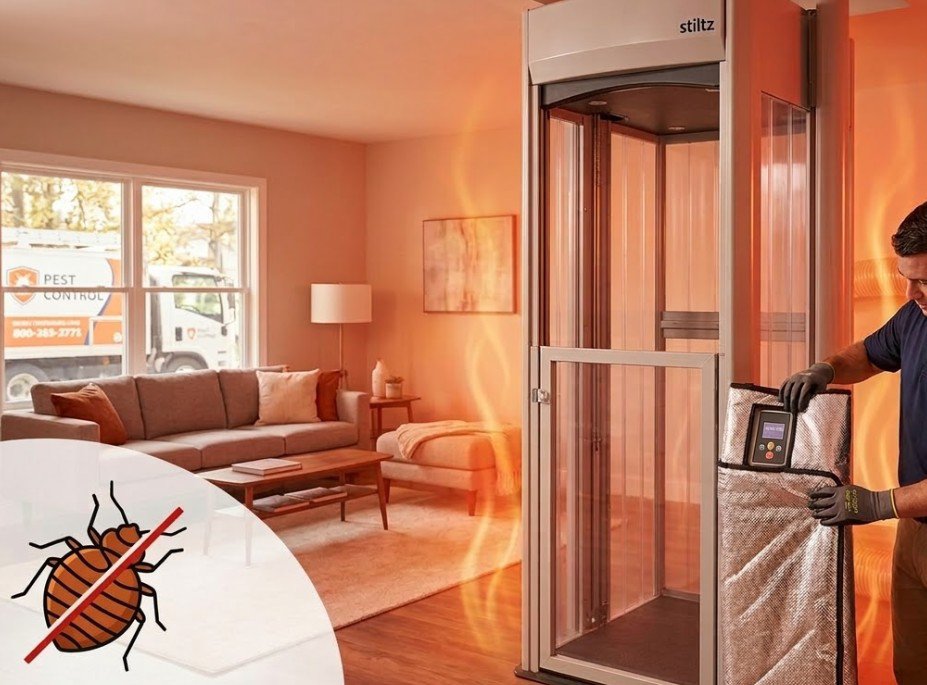
If your home has a Stiltz Homelift and you are scheduling a whole-home bed bug heat treatment, you are probably wondering whether the elevated temperatures could damage your elevator. It is a valid concern, and the answer is: yes, the heat can affect sensitive electronic components if you do not take proper precautions. The good news is that with some straightforward preparation, you can protect your Stiltz Homelift and proceed with the pest treatment confidently. In this article, we share the exact manufacturer guidance we obtained from Stiltz Global Engineering so you know precisely what to do.
Why We Researched This Topic
At Mobility123, we pride ourselves on being more than just an installation company. When one of our customers reached out with an uncommon question about whether their Stiltz Homelift could withstand a whole-home bed bug heat treatment, we did not have an immediate answer. Rather than guess, we went straight to the source.
We contacted Stiltz Technical Services, who escalated the inquiry to Stiltz Global Engineering in the UK. Within days, we had an official response with specific temperature thresholds and actionable steps for homeowners. We believe this information is too valuable to keep in one email thread, so we are sharing it here for anyone who may face the same situation.
This is the kind of above-and-beyond support our team provides to every customer. Whether you purchased your Stiltz Duo Alta from us or inherited one with your home, we are here to help you protect your investment.
How Bed Bug Heat Treatment Works
Whole-home heat treatment is one of the most effective methods for eliminating bed bug infestations. Professional pest control companies use industrial heating equipment to raise the interior temperature of a home to between 130 and 150 degrees Fahrenheit, sustained over several hours. At these temperatures, bed bugs and their eggs are killed at every life stage, including those hidden deep in cracks, crevices, and furniture.
The treatment typically lasts 6 to 8 hours from setup to completion. During this time, every room in the home is brought to and held at lethal temperatures. Homeowners are asked to remove pets, plants, pressurized containers, certain electronics, and heat-sensitive items from the home before treatment begins.
What many homeowners do not think about is the mechanical and electronic equipment that cannot simply be carried out the door, including home elevators and homelifts. These systems contain programmable logic controllers (PLCs), power supply units (PSUs), variable frequency drives (VFDs), and backup batteries, all of which have maximum operating temperature ratings that may be exceeded during heat treatment.
Can a Stiltz Homelift Handle the Heat?
According to Stiltz Global Engineering, the critical temperature threshold for a Stiltz Homelift is 130 degrees Fahrenheit. Below that temperature, the unit's core electronic components, including the PLC, PSU, and VFD, remain within their maximum operating temperature guidance. However, most bed bug heat treatments push well beyond 130 degrees Fahrenheit, with many treatments reaching 140 degrees Fahrenheit or higher for sustained periods.
This means that without preparation, a whole-home heat treatment could expose your Stiltz Homelift's electronic control panel to temperatures that exceed the manufacturer's recommended limits. While Stiltz noted that the unit would not be operating during the treatment, they advised caution based on the component specifications.
The key takeaway: your Stiltz Homelift can coexist with a bed bug heat treatment, but you must take specific protective steps before the pest control crew arrives.
Step-by-Step: Protecting Your Home Elevator Before Heat Treatment
Based on the guidance we received directly from Stiltz Global Engineering, here is what you should do before a whole-home heat treatment:
1. Remove the backup battery and take it out of the home
The Stiltz Homelift includes an emergency backup battery that allows the lift to descend during a power outage. This battery should be physically removed from the unit and taken outside the home before the heat treatment begins. Prolonged exposure to temperatures above 130 degrees Fahrenheit can damage lithium or lead-acid batteries and, in extreme cases, create a safety risk.
2. Disconnect all power to the unit
Turn off the dedicated circuit breaker that supplies power to the Stiltz Homelift. This ensures no electrical components are energized during the treatment, reducing the risk of heat-related damage to the controller, drive, and wiring.
3. Insulate the electronic control panel (e-panel) if temperatures will exceed 130°F
If the pest control company confirms that temperatures will surpass the 130-degree threshold, Stiltz Engineering recommends insulating around the e-panel. This can be done with a thermal insulation blanket or similar material that slows heat transfer to the sensitive electronics inside. Your pest control technician may be able to assist with positioning insulation, or you can contact your Stiltz dealer for guidance.
4. Allow the temperature to normalize before recommissioning the unit
After the heat treatment is complete, do not rush to turn the elevator back on. Allow the home's interior temperature to return fully to normal ambient conditions. Stiltz recommends this precaution so that the PLC, PSU, and VFD are not powered up while still at elevated temperatures.
5. Reinstall the battery and restore power
Once the home has cooled completely, reinstall the backup battery, switch the circuit breaker back on, and test the lift before resuming regular use. If anything seems unusual, such as error codes, sluggish movement, or unexpected stops, contact your dealer for a service visit.
What About Other Home Elevator Brands?
The guidance in this article is based on a direct inquiry to Stiltz Global Engineering and applies specifically to Stiltz Homelifts (including the Duo Alta and Trio Alta models). If you own a home elevator from another manufacturer, such as Savaria, Cibes, Bruno, or Symmetry, do not assume the same thresholds or procedures apply.
That said, the general principles are sound for virtually any home elevator or homelift: disconnect power, remove any batteries, and consult with your dealer or the manufacturer before exposing the unit to sustained high heat. Every elevator contains electronic controllers, wiring, and drive components that have their own temperature tolerances.
If you own a different brand and are facing a similar situation, Mobility123 can help. As authorized dealers for Savaria, Stiltz, Bruno, Cibes, and other leading manufacturers, we have direct lines to the engineering teams and can obtain model-specific guidance for your unit.
After the Heat Treatment: Getting Your Elevator Back Online
Once the pest control company has completed the treatment and confirmed that fans and ventilation have brought the home back to a comfortable temperature, you can begin the recommissioning process. Here is what to keep in mind:
Be patient. Even after the main living areas feel cool, enclosed spaces like closets, mechanical areas, and the area around your elevator's e-panel may retain heat longer. Give it extra time.
Inspect before powering on. Do a quick visual check of the e-panel, wiring, and battery compartment. Look for any signs of warping, discoloration, or melted components. If everything looks normal, proceed with reconnecting power.
Test the lift. Run the lift up and down a few times without passengers to confirm smooth operation. Check that the doors latch properly, the light curtain activates, and there are no error codes on the display. If you need help interpreting error codes, our Stiltz troubleshooting guide covers the most common scenarios.
Schedule a maintenance visit if needed. If you notice anything unusual or simply want peace of mind, a routine service visit from a licensed elevator mechanic can confirm everything is operating within spec. Mobility123 offers Stiltz maintenance plans that include annual or semi-annual inspections.
Other Home Maintenance Scenarios That May Affect Your Elevator
Bed bug heat treatment is not the only home maintenance activity that warrants extra attention around your elevator. Here are a few other scenarios where you should take precautions:
Interior painting and staining: Fumes and airborne particles can settle on electronic components. Cover the e-panel and keep the lift cab doors closed during nearby painting work.
Flooring installation: Dust from sanding hardwood floors or cutting tile can infiltrate the elevator's drive system. If major flooring work is happening near the lift, cover openings and consider powering down the unit until dust settles.
HVAC work and ductwork modifications: If contractors are working on your home's heating or cooling system near the elevator shaft or e-panel, ensure they know the equipment is there and take care not to direct exhaust or debris toward it.
Extended power outages: During a prolonged outage, the backup battery will engage and eventually drain. If you anticipate a long outage (such as during a major storm), consider disconnecting the battery to preserve its life.
In all of these situations, the best approach is to consult with your elevator dealer before the work begins. A two-minute phone call can prevent a costly repair down the road.
Frequently Asked Questions
What temperature do bed bug heat treatments reach?
Professional whole-home bed bug heat treatments typically raise interior temperatures to between 130 and 150 degrees Fahrenheit. The treatment is sustained at these elevated temperatures for several hours to ensure all bed bugs and eggs are eliminated throughout the home, including those hidden in walls, furniture, and crevices.
Will bed bug heat treatment damage my Stiltz Homelift?
Not if you take the right precautions. Stiltz Global Engineering advises removing the backup battery from the home, disconnecting all power, and insulating the electronic control panel if temperatures will exceed 130 degrees Fahrenheit. Following these steps protects the PLC, PSU, and VFD components from heat-related damage.
Do I need to remove my home elevator before pest control heat treatment?
No. You do not need to remove the elevator itself. The lift car, rails, and structural components can withstand the temperatures used in bed bug heat treatment. The concern is limited to the electronic components and the backup battery, which need to be powered down, protected, or removed.
Can I use my home elevator immediately after heat treatment?
You should wait until the home's interior temperature has fully returned to normal before turning the elevator back on. Powering up electronic components while they are still at elevated temperatures could cause damage. Once the home has cooled, reinstall the battery, restore power, and test the lift before resuming regular use.
Does Mobility123 offer service visits after pest control treatments?
Yes. If you want professional confirmation that your Stiltz Homelift or home elevator is operating correctly after a heat treatment or any other unusual event, Mobility123 offers service visits and maintenance plans throughout New Jersey. Our licensed elevator mechanics can inspect and test every component for safe operation. Call our Absecon office at (609) 385-9575 or our Hillsborough office at (908) 498-7155.
Protecting Your Investment and Your Independence
A home elevator is a significant investment in your independence and quality of life. When unexpected situations arise, like a pest infestation that requires heat treatment, it is reassuring to know that your equipment can be protected with just a few simple steps.
At Mobility123, we do not stop at installation. We are your long-term partner for every question that comes up, whether it is routine maintenance, a troubleshooting issue, or an uncommon scenario like this one. If you have a question about your Stiltz Homelift or any other accessibility equipment in your home, do not hesitate to reach out. Call us at (609) 385-9575, visit our showroom in Hillsborough, or contact us online to schedule a free consultation.
Information sourced directly from Stiltz Global Engineering, March 2026.
