
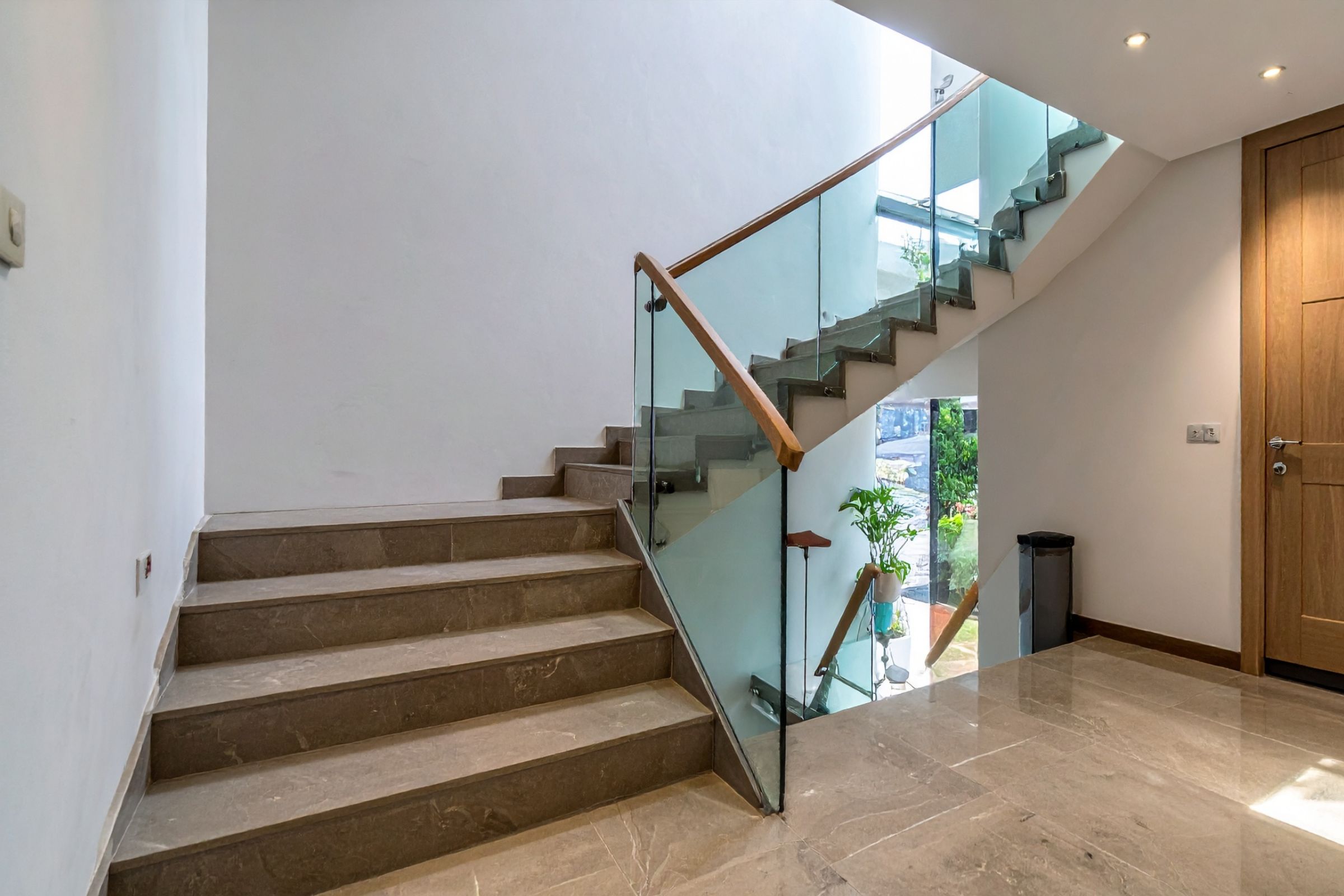
Whether you’re in a historic brownstone in North Jersey, a classic Cape Cod in the suburbs, or a beachside bungalow along the shore, staircases in New Jersey homes come in a variety of shapes and configurations. While these designs reflect regional architecture and home age, many of them were not built with resident accessibility in mind.
In this guide, we’ll explore the most common staircase styles found in NJ homes and outline practical upgrades to improve safety and support independent living. This is especially relevant for seniors or individuals with mobility challenges.
Straight Staircases: Simple, but Not Always Safe
Straight stairs are the most common type in both new construction and older NJ homes. Found in split-levels, townhomes, and ranch renovations, they consist of a single flight without turns.
Accessibility issues:
- Lack of handrails on both sides
- Slippery or uneven steps
- Long runs without rest points
Safety upgrades:
- Install a straight stairlift for continuous support
- Add slip-resistant treads or carpeting
- Ensure lighting is bright and even
- Include handrails on both sides where possible
L-Shaped and U-Shaped Staircases: What’s Common in Larger Homes?
L and U shaped stairs are frequently seen in Colonial, Craftsman, and modern multi-story homes throughout Central and South Jersey. These designs add visual appeal but can create complexity.
Accessibility issues:
- Mid-flight landings or 90°/180° turns
- Space limitations for traditional lift equipment
Safety upgrades:
- Use curved stairlifts to navigate turns and landings
- Place grab bars or resting chairs at landings
- Enhance visibility at transitions with LED lighting
Split-Level Staircases: A New Jersey Staple
Split-level homes, popular in suburban areas like Cherry Hill or Edison, have short flights leading to half levels, creating frequent mobility “hiccups” where traditional lifts would have to be dismounted to reach the top.
Accessibility issues:
- Multiple short staircases
- Confusing layout for those with vision impairments
Safety upgrades:
- Install multiple stairlifts or a custom curved stairlift
- Consider a home wheelchair lift or vertical platform lift
- Use color-contrasted step edges and signage for orientation
Spiral Staircases: Space-Saving but Difficult to Navigate
Spiral stairs are found in some beach homes in coastal NJ and small urban dwellings where space is tight. While they save square footage, they’re among the least accessible staircase types.
Accessibility issues:
- Tight curves, narrow steps
- Incompatibility with most stairlift systems
Safety upgrades:
- Replace or reroute traffic using a temporary ramp over stairs
- Limit spiral stair use to storage or non-essential access
Grand Staircases: Found in Custom and Luxury Homes
In larger homes, specifically new builds or upscale properties in areas like Princeton or Short Hills, open-concept or grand staircases with floating or wide steps are common.
Accessibility issues:
- Open risers and floating designs can cause visual depth issues
- Lack of continuous rail support
- Poor compatibility with standard stairlifts
Safety upgrades:
- Retrofit with a home elevator lift or residential elevator
- Install closed risers or under-step-lighting
- Use curved stairlifts designed for wide or artistic layouts
Final Thoughts: Making Any Staircase Safer in NJ Homes
No matter the design, every staircase in a home can be adapted to support safer, more independent living. If you’re not sure which accessibility solution is best, Mobility123 offers local expertise in New Jersey accessibility solutions like stairlifts and home elevators. From straight stairlifts to wheelchair lifts in NJ, we’ll help you match your staircase type with the right product to meet your mobility needs.
Ready to make your home safer? Contact our team today for a personalized assessment. We’ve proudly helped thousands of NJ residents improve mobility and peace of mind, one staircase at a time.
